Ona Bros

Presentation of the Cryo project

Ona Bros

December 17th, 7 pm

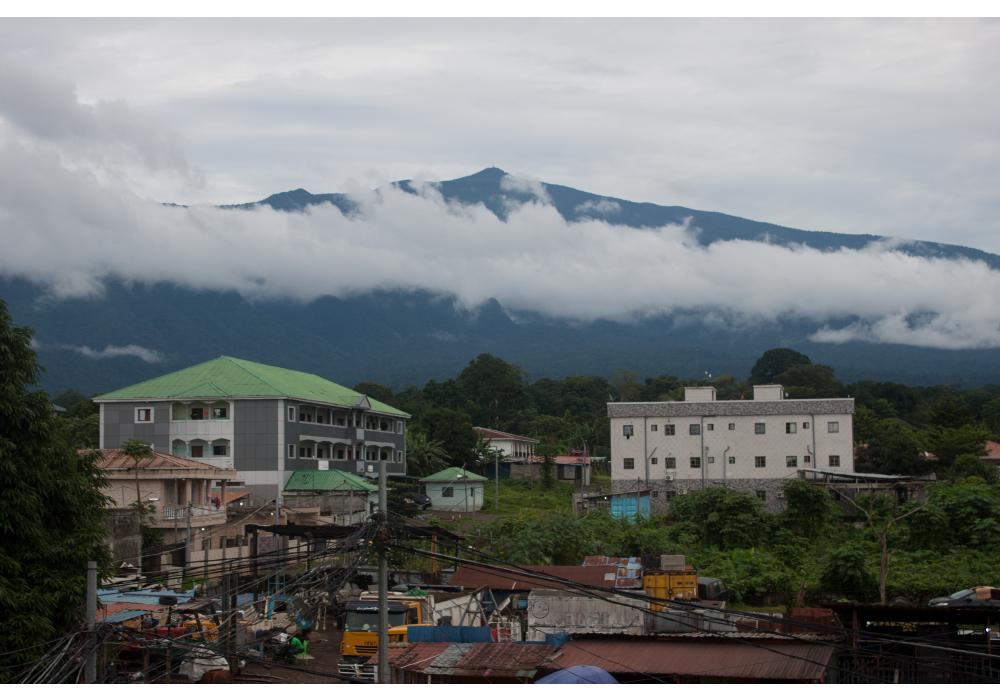
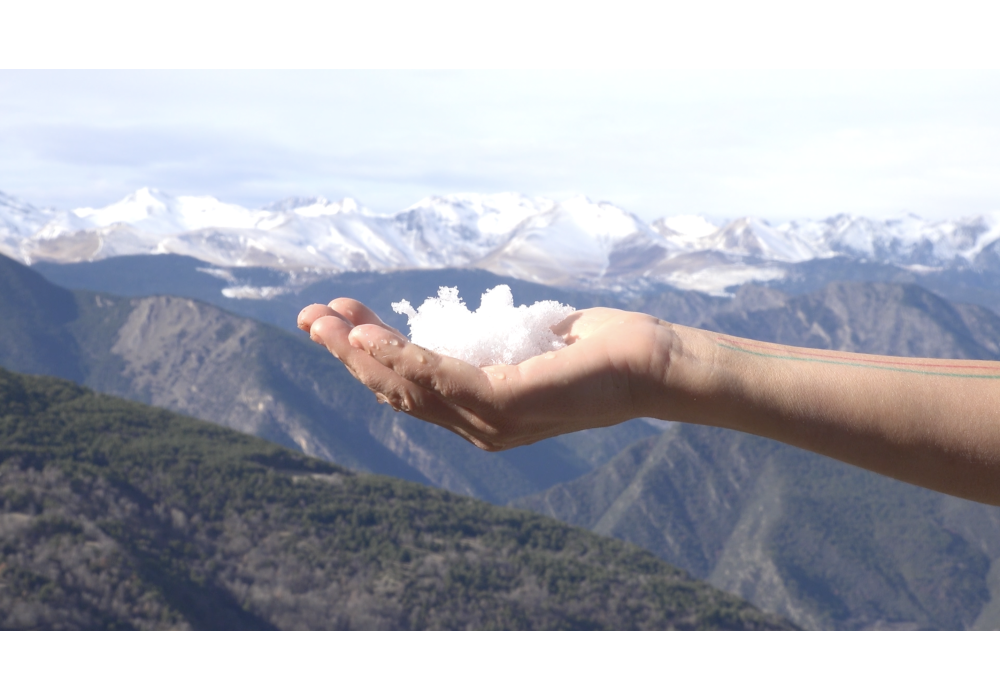
Cryo is based on the concept of cryopolitics (Michael Bravo, 2006), which focuses attention on how global cold chains have become geopolitically, economically, biologically and symbolically vital in the 21st century. The cryosphere, or coldscape, is the planetary network of cold formed by the polar ice caps, snow-capped mountains known as the ‘Third Pole’ and artificial low-temperature production systems (server refrigerators, refrigerated containers for transporting goods, air conditioners, gene bank freezers, etc.). A cryoecological network where ice blurs the natural/artificial, life/death and urban/rural divides as part of an interconnected continuum.

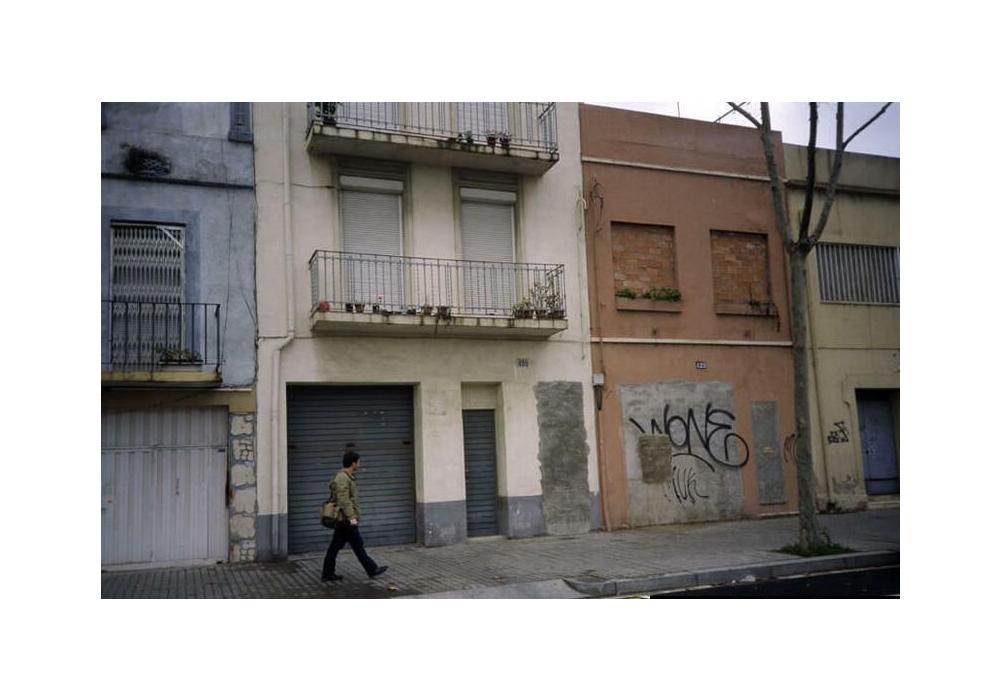
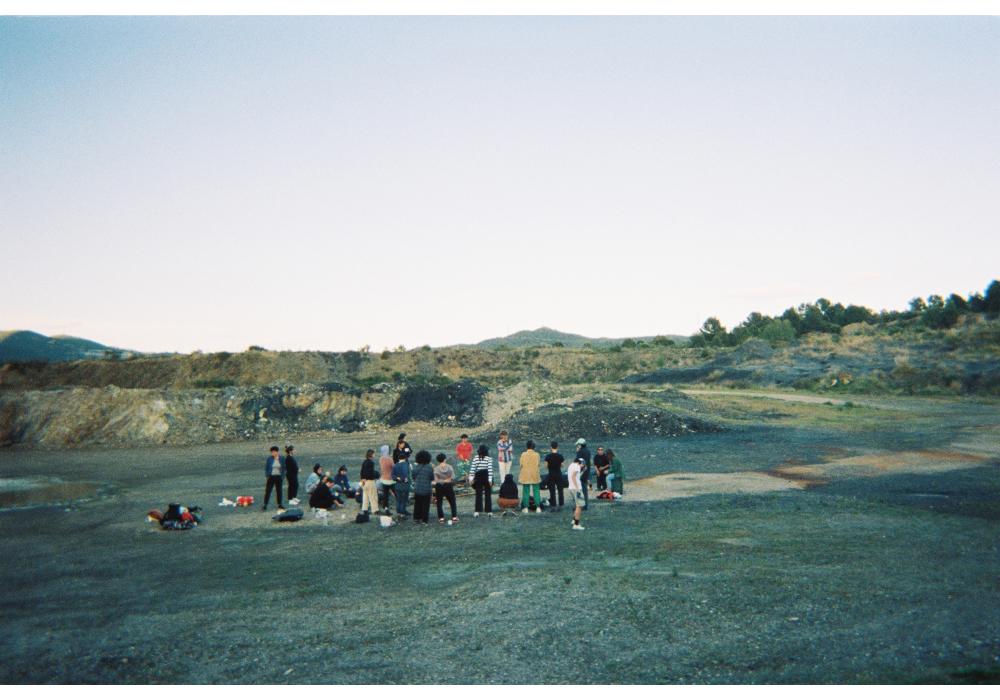
Cryo connects three unrelated contexts that on the face of it seem unrelated, delving into the cryopolitical continuum that unites them all: Farrera, a small town in the High Pyrenees; La Fuliola, a village of a thousand inhabitants in the county of L’Urgell; and the city of Barcelona. In each of these contexts, I am working on a technothermic figuration, a technology of cold from which we will explore the networks of life/death that are intertwined with cold.

These three areas represent a fundamental axis of displacement in the economic, social and ecological composition of the territory, both historically and in the present day. Cryo travels along this axis by questioning the material and symbolic conditions that shape cold ecosystems today, and it does so through methodologies permeated by speculative gestures. The project is conceived as an exercise in political imagination that promotes epistemic justice as regards the accounts of present climates to come.
Related

Laura Arensburg

Partially Sighted Wandering

Laura Arensburg

Partially Sighted Wandering is a journey that aims to provoke a strange/quizzical perception of the environment from an unfocused perspective. A guided tour by a body that attempts to delve into the memories, anecdotes and legends of a place to which it will never truly belong. Loitering with partially sighted glasses that incites an unstable, vulnerable state that activates the senses on edge, like a hallucinatory, dreamlike, oracular attempt to reorient ourselves amidst the surrounding crisis and catch glimpses of futures that we affect as they slip through our fingers.

Laura Arensburg works with moving bodies and images to forge an intimate connection with her surroundings amid the transitions and contradictions of identity, perception and contemporary hierarchies.

A graduate of ENERC-INCAA (Argentina) and PEI-MACBA (Spain), she is currently completing an Art Gender Nature master’s degree at FHNW in Switzerland.

She has developed creative, research and artistic mediation projects at MACBA, CaixaForum, La Capella, Museo Moderno (Argentina), Centro Cultural Recoleta (Argentina), Hangar, La Escocesa, Can Felipa Arts Visuals, Dilalica, Usina del Arte (Argentina), BilbaoArte, Mar del Plata Festival, LOOP and L’Alternativa.

Jordi Mani Huesca

Bonko in Transit: Rituals, Bodies and Sound

Jordi Mani Huesca

Bonko in Transit is the second phase of Bonko: Sound Anthropology, a research project exploring the ancestral tradition of bonkó or ñánkue, which is linked to the Ekpe masquerade society and has its roots in Equatorial Guinea, Cuba and other territories, centred around the island of Bioko and adopting an Afrofuturist, transfeminist and decolonial perspective. Combining sound archiving, fieldwork and community collaboration, the project traces the connections between rhythm, ritual and migrated memory, building bridges between Malabo and Barcelona. Through workshops, publications and sound actions, the research paves the way for a reinterpretation of this legacy, positioning the body and listening as tools of resistance and collective creation.

Mani Tapés is a DJ, producer and researcher born in Equatorial Guinea and based in Barcelona. He combines electronic music with ancestral African beats, taking an eco-futuristic approach to create spaces for celebration and resistance based on dissidence. His practice integrates community, sound archives and performance in order to weave together migrant memories and contemporary rituals. As a member of the dissident collective Don’t Hit a la Negra, he promotes projects that unite the body, festivities and critical research. His work is a cross between club culture and decolonial thought.

Inés Sybille Vooduness

Creole Cadences

Inés Sybille Vooduness

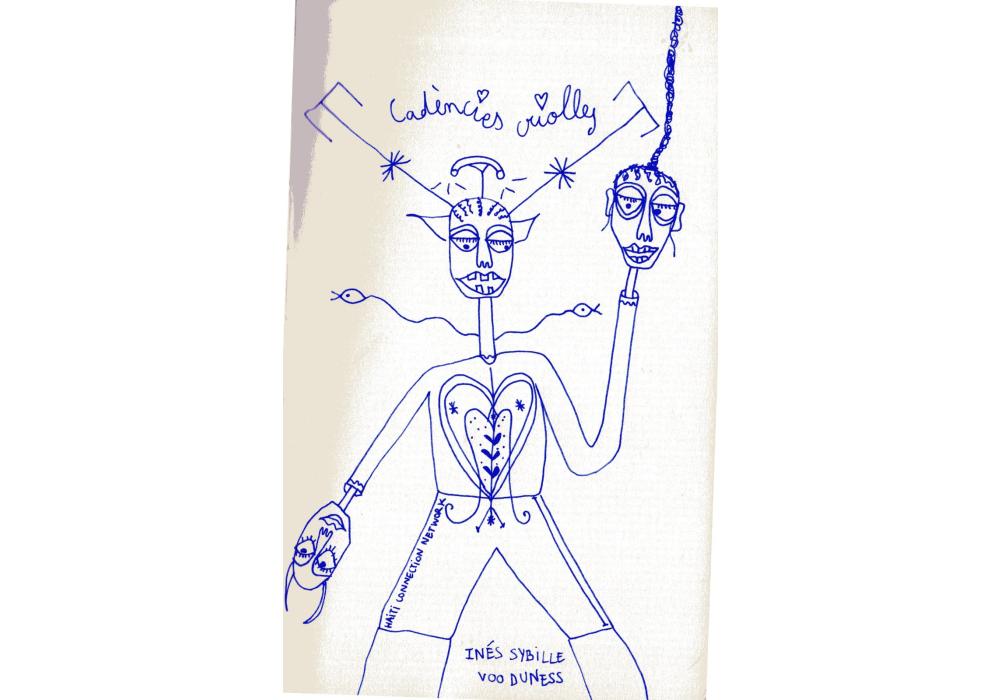
Creole Cadences is a poetic-argumentative essay driven by the functions of three families of Haitian voodoo deities: the love and eroticism of Erzulie, the initiatory capacity and wisdom of Simbi, and the mischief and endless unfolding of the Marassa twins. This spiritual device draws us nearer to the choreographic field of this publication: the kuduro of Angola, the coupé décalé of the Ivory Coast, dancehall from Jamaica, and pantsula and amapiano from South Africa. The dancer and researcher Inés Sybille situates herself in relation to these Black technopoetics to produce her diasporic, mnemonic subjectivity and her existential consciousness.

The intrinsic philosophies of Haitian Voodoo, the kuduro of Angola and the coupé décalé of the Ivory Coast compel the artist to exist within a dynamic interplay of relationships and mutations. She does not represent any of the cultural codes she is passionate about, learning by approaching them carefully, with enough time to be able to understand without seeing or deciphering everything. These connections of thought and body help her to embrace the transtemporal mysteries that also intervene in her diasporic memory and existence.

Chocero

Neighbourhood

German Chocero

Neighbourhood is a poetic co-creation project in public secondary schools that attempts to open up the classroom as a space for writing from the margins of language. The project takes its name from the film of the same name (Barrio by Fernando León de Aranoa, 1998), as well as from the etymology of the word: barrí, ‘outside the walls’. This is also the nature of poems: a way of saying that escapes from the centre. Writing together from the neighbourhood (barrio) is writing from mud (barro): that which is not paved, which can be moulded with the hands. The proposal stems from two intuitions: firstly, that popular, youthful language, marked by origin and context, is legitimate poetic material; and secondly, that poetry can be a way of symbolically appropriating the world. 

German Chocero is a poet, visual artist and teacher. Born in Granollers, he has always lived in the neighbouring area. When he was fifteen, his state secondary school organised an oral poetry workshop that sparked his interest. After spending a few years involved with poetry slam, he began working on various educational projects that involved taking poetry into the classroom. His research understands metaphor as a pedagogical resource that broadens definitions and horizons, taking a queer, class-based approach that questions subjectivity.

Fernando Gandasegui

Totes les imatges desapareixeran

Fernando Gandasegui

How is the accelerated transformation of consuming and producing images affecting the languages of the performing arts? In this new scopic regime, which is now also cognitive, affective and relational, bodies and their performativities are the preferred medium of inscribing and transmitting, just as they are on stage. Can the performing arts therefore provide tools and strategies in the current crisis of the image? 

Non-hegemonic dance and theatre have operated as a symptom or reflection of each era’s malaise, or as a response to it. Similarly, in experimental performance practices today, we find artists problematising and expanding the spectrum of relationships with images, affirming singular, diverse and disruptive worlds that challenge algorithmic flows, trends and temporalities.

In the face of the homogeneity and uniformity of languages, which are consumed and disappear as quickly as commodity images, this investigation suggests ways of resisting the omen announced by its title. All Images Will Disappear therefore proposes identifying, unpacking, showcasing and circulating ways of doing in performance arts today that encourage alternative, critical and persistent visualities from which we can conspire towards new horizons of action. 


An artist, curator and researcher specialising in performance arts, he curated the Domingo Festival at La Casa Encendida, the Secuencia season at Fabra i Coats, the programmes Desbordes: otra historia del ojo (Spillovers: Another History of the Eye) at Punto de Vista, Lo que nos mueve (What Moves Us) at La Caldera, Vivac at La Plaza in Verano (Matadero), residencies at the Spanish Cultural Centre in La Paz and the ‘Eléctricas utopías en la noche púrpura’ (Electric Utopias in the Purple Night) conference at Injuve. He was the coordinator and co-artistic director of Teatro Pradillo in Madrid.

His artistic work is included in the CA2M collection and the Matadero Creators Archive, and it has been exhibited at many national and international institutions. He was a member of the PLAYdramaturgia collective and was an artist-in-residence at La Caldera, Graner, La Casa Encendida and L’Estruch.

He has written handheld programmes for Teatros del Canal and Conde Duque, and his work has been published in catalogues such as Querer parecer noche (CA2M). He is also the author of numerous reviews and interviews on his Teatron blog.

He teaches classes and workshops in settings such as Bar Yola alongside Javi Cruz.

He currently co-directs Teatron and is a member of Fondo, a space at FOC dedicated to research in the performing arts.

Aldo Urbano

The Age of Abundance: Robbed by Rogues

Aldo Urbano Pérez

Robbed by Rogues is a comic book that uses humour and an exaggerated mystical tone to address issues such as social inequality, a lack of opportunity, the reactions of a poisoned land and the passage of time. Its characters experience adventures and seek help in a devastated landscape where humour is an inevitable consequence rather than a personal choice. Unscrupulous crooks, losers and hustlers come together in these cartoons, leading to reflections, conflicts and also comical situations. No one would guess, but above all their setbacks lies the search for wisdom, something that only a few of them will find.

Aldo Urbano lives and works in Barcelona. His work constructs enigmas whose ultimate meaning is elusive, especially for himself. He uses painting to explore the mechanisms of perception in the quest for a refreshing experience. In order to do this, he creates installations in which such an experience can be possible. His work also leans towards drawing and writing, with which he adopts narrative forms akin to comics where irony and humour are both present.

Rubén Sánchez Salas

Loop4ever Project Presentation

Rubén Sánchez Salas

Presentation: November 25th at 6:00 PM

“The creatures of this place sing the song of a legend… Its melody heralds the appearance of a new star in the sky that will arrive together with a perpetual night. The creatures intone this song, proclaiming the impact of the star closest to the world with this newly appeared star… And exhaling the final verses of this song, the appearance of a creature that is unknown to everyone in this place…”

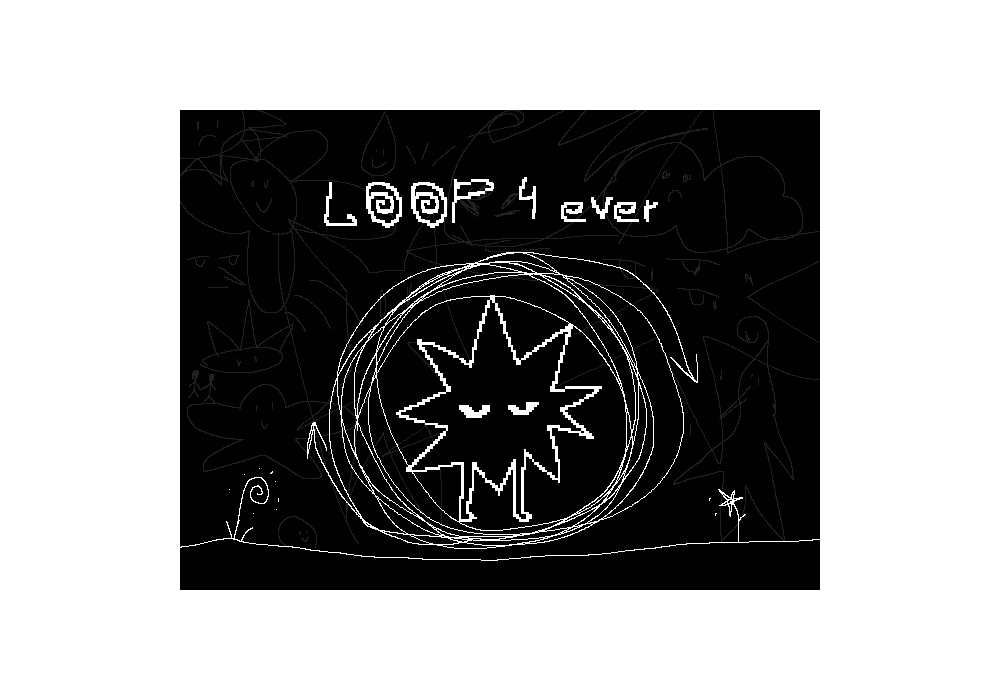
Loop4ever is a narrative video game with rogue-like RPG elements that explores repetition as a tool to help us create and define our identity and connections with the characters that appear in our lives. The identity of the world of Loop4ever and the place occupied by the creatures in it are shaped through a melody performed by the creatures of this world and intervened by a new creature that has appeared in this place.

Els Tres Pallars

Els Tres Pallars

Xavier Acarín Wieland

Off-site Project by Barcelona Producció 2025 
Historical Archive of Poblenou

The event begins on Saturday, 11 October at 11 am at Ca l’Isidret (Carrer de Josep Pla, 174) with a parade, a street procession and an expanded performance through the neighbourhood of Provençals del Poblenou featuring atotaixodansa and La Txaranga del Melón. For one hour, the route invites you to stroll through the streets of this neighbourhood, which has still not been fully ‘developed’ by the 22@ sector. The procession ends at the Historical Archive of Poblenou, in the Torre de les Aigües del Besòs, to celebrate the opening of the exhibition Els tres Pallars. This exhibition stems from a garden city project planned for a city block in the neighbourhood. Although it never ultimately became reality, its history draws us into debates about urban models and their effects more than a hundred years later. The exhibition features the participation of residents of the Provençals and El Maresme neighbourhoods, with design by Paratext, publishing by Lumbung Press and artworks by artists Joan Bennàssar and Blinky Palermo.

Catarina Botelho

Fantasmas en el Espacio Urbano– Barcelona (Ghosts in the Urban Space – Barcelona)

Catarina Botelho

Lesbian identity was virtually invisible in the Westernised world for a long time, ‘the lesbian as an identity would therefore be defined precisely by the absence of spatial location’, outside the field of the visible, like the ‘blind spot’ of a rear-view mirror, ‘a ghost’ in the city.

How does the lesbian body (self-)represent itself in urban space when it finally abandons its ‘phantasmal’ state?

What counter-narratives of the recent past can emerge when we reveal these representations?

This research is based on the first (self-)representations of visible lesbians in Barcelona’s urban space, between Spain’s transition to democracy and the end of the 1990s, seeking dialogues with this recent past and trying out forms of reparation.


Catarina Botelho

I am a visual artist and researcher interested in the relationships between spaces, places and architectures in urban space and their uses and experiences that challenge productivist logics. I have been developing projects in recent years and examining the relationship between the lesbian body and urban space in the Iberian Peninsula.

I have exhibited in places such as: Museu de Arte, Arquitectura e Tecnologia, Lisbon (2021); Fundación Foto Colectania, Barcelona (2020); Sesc Pinheiros, São Paulo (2015); Villa Iris, Fundación Botín, Santander (2014); Elba Benítez en Kvadrat, Madrid (2012); Centre de Cultura Sa Nostra, Palma de Mallorca (2009); Casa de Serralves – Fundação de Serralves, Porto (2007), and La Casa Encendida, Madrid (2005). I have received grants in recent years from the Fundación ”la Caixa” (2018), Fundación Gulbenkian (2018), Barcelona City Council (2021) and Government of Catalonia (2022).

I have a Degree in Fine Arts from the University of Lisbon’s FBA; I did the Independent Studies Programme (PEI) at MACBA in 2018, and I completed the MUECA – Master in Cultural Studies and Visual Arts (Feminist and Queer Perspectives) at Miguel Hernández University in 2022.

Subscribe to Non-exhibition projects